
For Attorneys and Corporate Clients

Combating Nuclear Verdicts: How High-Quality IMEs Protect the Defense

Nuclear verdicts are no longer rare, unpredictable events—they are becoming a defining challenge in modern litigation. These high-value jury awards, often exceeding $10 million, are increasing in both frequency and severity, creating significant financial and reputational risks for defendants, insurers, and legal teams.

What makes nuclear verdicts especially difficult to manage is that they are often driven by emotional narratives rather than strictly objective evidence. Jurors may sympathize with plaintiffs, particularly when injuries are presented in a compelling and humanized way. When medical evidence is unclear, inconsistent, or overly complex, jurors are more likely to rely on emotion instead of facts.

This shift has forced defense teams to rethink their strategies. It is no longer enough to simply present evidence—the evidence must be clear, credible, and easy to understand. One of the most effective ways to accomplish this is through Independent Medical Examinations (IMEs), particularly when working with experienced medical expert witness services that specialize in delivering defensible, high-quality evaluations.

Jury and judge in courtroom during high-value civil litigation proceeding
High-value jury trials often contribute to the rise of nuclear verdicts in complex litigation cases.


Understanding Nuclear Verdicts

A nuclear verdict is typically defined as a jury award exceeding $10 million, but the term has evolved to describe any verdict that is disproportionately large compared to the facts of the case. These verdicts often reflect more than just the evidence presented—they reveal how jurors interpret fairness, responsibility, and harm.

In many cases, nuclear verdicts are not the result of overwhelming evidence, but rather the absence of strong counterarguments. When jurors are not given a clear framework for understanding medical issues, they may fill in the gaps themselves. This can lead to inflated damages, particularly when pain, suffering, and long-term impact are emphasized without sufficient challenge.

Medical ambiguity is one of the most significant contributors to this problem. If injuries are not clearly defined or if causation is not thoroughly explained, the defense loses its ability to control the narrative. This is where IMEs become critical.


The Psychology Behind Nuclear Verdicts

To effectively combat nuclear verdicts, it’s important to understand why they happen. Jurors are not medical experts, and they are not immune to emotional influence. In fact, many verdicts are shaped by cognitive biases, including:

  • Anchoring bias, where jurors rely heavily on the first number presented (often by the plaintiff)
  • Confirmation bias, where jurors favor information that supports their initial impressions
  • Empathy bias, where emotional connection to the plaintiff influences decision-making

When medical evidence is unclear or difficult to interpret, these biases become even more influential. Jurors may default to trusting the plaintiff’s narrative, especially if it is presented in a compelling way.

Clear, objective medical evidence is one of the few tools that can counteract these biases effectively.


The Role of Independent Medical Examinations (IMEs)

Independent Medical Examinations are designed to provide an objective, third-party evaluation of a claimant’s medical condition. Conducted by a neutral physician, an IME assesses critical elements such as diagnosis, causation, treatment necessity, and long-term prognosis.

Unlike treating physicians, who are focused on patient care, IME providers are tasked with evaluating the facts of the case. Their role is not to advocate, but to analyze and report findings in a clear, unbiased manner.

These findings are documented in comprehensive IME reports, which serve as a foundational component of the defense strategy. A well-prepared report can clarify complex medical issues, identify inconsistencies, and provide a framework for understanding the case.


What Makes an IME “High-Quality”?

Not all IMEs are created equal. The effectiveness of an IME depends on several key factors:

Physician Expertise

The credibility of the evaluation depends heavily on the qualifications of the physician. A skilled physician expert witness brings both clinical knowledge and legal understanding to the process, making their testimony more persuasive in court.

Thorough Documentation

A high-quality IME report is detailed, well-organized, and supported by evidence. It should clearly explain findings, reference medical records, and provide logical conclusions.

Objectivity

Bias—real or perceived—can undermine the value of an IME. The physician must remain neutral and focus solely on the facts.

Clarity

Medical terminology should be translated into language that jurors can understand. Clarity is essential for reducing confusion and preventing misinterpretation.


How the IME Process Works

The IME process involves several critical steps, each of which contributes to the overall strength of the evaluation.

Record Review

The physician begins by reviewing all relevant medical records, including treatment history, diagnostic imaging, and prior evaluations.

Coordination and Scheduling

An efficient IME referral process ensures that the evaluation is scheduled promptly and that all necessary information is available.

Examination

The physician conducts a thorough examination of the claimant, documenting findings and comparing them to the reported symptoms and medical history.

Report Preparation

The final report summarizes the physician’s findings and provides clear conclusions regarding diagnosis, causation, and treatment.
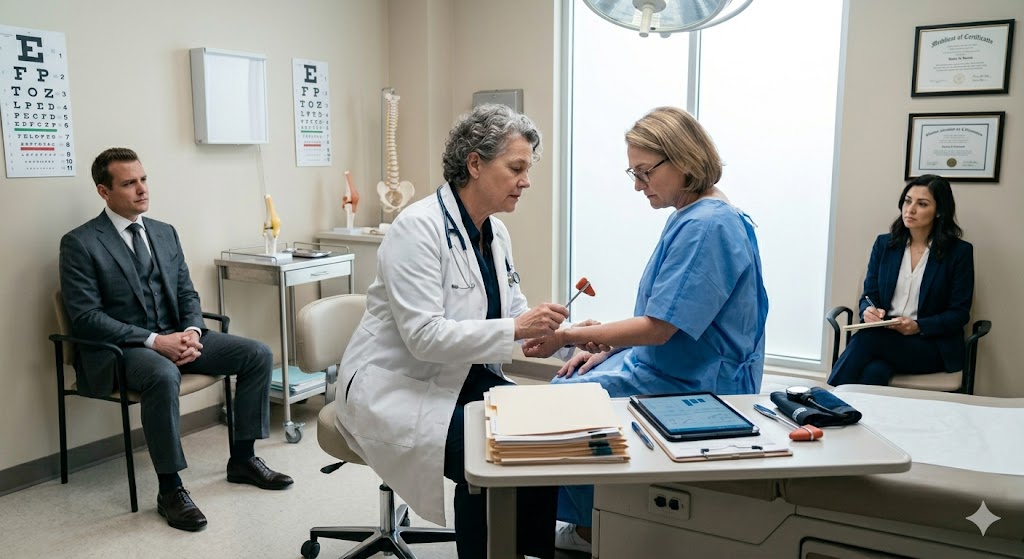
Medical examiner conducting an independent evaluation in a clinical environment
Thorough independent medical evaluations help establish objective findings that can reduce the risk of nuclear verdicts.


How High-Quality IMEs Prevent Nuclear Verdicts

1. Establishing Credibility

Credibility is one of the most important factors in litigation. A well-qualified physician can present medical evidence in a way that is both authoritative and accessible, making it easier for jurors to trust the defense’s position.

2. Clarifying Causation

Causation is often the most contested issue in personal injury cases. IMEs help determine whether injuries are directly related to the incident or influenced by pre-existing conditions.

3. Limiting Damages

By identifying inconsistencies or exaggerations, IMEs can help limit the scope of damages being claimed.

4. Strengthening Cross-Examination

IME findings provide attorneys with the information they need to challenge opposing testimony effectively.

5. Reducing Emotional Influence

Clear, objective evidence helps shift the focus from emotion to facts, reducing the likelihood of excessive awards.


Common Mistakes That Increase Risk

Even when IMEs are used, certain mistakes can reduce their effectiveness:

  • Delaying the IME until late in the case
  • Using underqualified physicians
  • Producing vague or incomplete reports
  • Failing to integrate findings into the overall strategy

Avoiding these pitfalls is essential for maximizing the value of IMEs.


Integrating IMEs Into a Proactive Defense Strategy

The most successful defense strategies are proactive, not reactive. IMEs should be used early in the litigation process to identify risks and guide decision-making.

Working with experienced medical expert witness services ensures access to qualified physicians, efficient coordination, and high-quality reporting.

In addition, staying informed about industry trends is critical. Resources like a trusted medical expert witness blog can provide valuable insights into emerging risks and best practices.


Real-World Impact of Strong IMEs

Cases supported by strong IMEs often see:

  • Lower settlement values
  • More favorable jury outcomes
  • Increased confidence during litigation
  • Reduced exposure to excessive damages

These outcomes highlight the importance of investing in quality medical evaluations.

 

Breaking It All Down

Nuclear verdicts are not just an emerging issue—they represent a lasting shift in the litigation landscape. As jury expectations evolve and emotional narratives play a larger role in decision-making, the risk facing defense teams continues to grow. What once may have been considered a defensible case can quickly escalate when medical evidence is unclear, inconsistent, or open to interpretation.

In this environment, clarity is everything. Defense strategies must be built on evidence that is not only accurate, but also understandable and credible to a jury with no medical background. This is where high-quality Independent Medical Examinations become indispensable. They provide a structured, objective perspective that helps cut through complexity and ensures that the facts of a case are presented in a clear and compelling way.

Strong IMEs do more than support a case—they shape it. They help define causation, identify inconsistencies, and establish a reliable medical narrative that can withstand scrutiny at every stage of litigation. When done correctly, they give defense teams the confidence to challenge exaggerated claims and push back against emotionally driven arguments that often lead to excessive awards.

However, the true value of IMEs lies in how they are used. A proactive approach—one that integrates medical evaluations early and aligns them with overall legal strategy—can make a measurable difference in outcomes. Waiting until later stages of a case often limits their effectiveness, while early, well-executed evaluations provide a strategic advantage that carries through negotiations and trial.

As nuclear verdicts continue to rise, the need for stronger, more disciplined defense strategies becomes increasingly clear. Organizations that prioritize objectivity, invest in high-quality medical evaluations, and focus on clear communication are better positioned to manage risk and achieve more favorable outcomes.

Ultimately, combating nuclear verdicts is about control—controlling the narrative, controlling the evidence, and controlling how a case is understood by a jury. With the right approach, defense teams can move away from reacting to risk and instead take meaningful steps to prevent it.

Frequently Asked Questions

What is considered a nuclear verdict?

A nuclear verdict typically refers to a jury award exceeding $10 million, but the definition goes beyond a specific dollar amount. In many cases, a verdict is considered “nuclear” when it is disproportionately high compared to the facts, evidence, or actual damages involved. These verdicts are often influenced by emotional appeals, unclear liability, or confusion surrounding medical evidence, leading juries to award significantly more than expected.

Nuclear verdicts are increasing due to a combination of legal, social, and economic factors. Jurors today tend to be more sympathetic toward plaintiffs and more skeptical of corporations and insurers. At the same time, plaintiff attorneys are using more advanced strategies, including emotional storytelling and anchoring techniques, to influence jury perception.

Economic pressures, such as rising healthcare costs and inflation, also play a role. Jurors may feel compelled to award larger sums to account for future uncertainty, even when the supporting evidence is limited.

Medical evidence is one of the most critical components in determining case outcomes. When medical findings are unclear, inconsistent, or overly complex, jurors may struggle to interpret them accurately. This confusion can create an opening for plaintiff narratives to dominate, increasing the likelihood of a nuclear verdict.

Clear, objective, and well-documented medical evidence helps ground a case in facts and reduces the risk of decisions driven by emotion.

An Independent Medical Examination (IME) is an evaluation conducted by a qualified physician who is not involved in the patient’s treatment. The purpose of the IME is to provide an unbiased, evidence-based assessment of the individual’s medical condition.

IME physicians evaluate factors such as diagnosis, causation, treatment necessity, and level of impairment. Their findings are documented in detailed reports that are used throughout the litigation process.

IMEs help prevent nuclear verdicts by providing clarity and credibility in cases where medical evidence may otherwise be disputed or misunderstood. A high-quality IME can:

  • Establish whether injuries are directly related to the incident
  • Identify pre-existing conditions
  • Evaluate the necessity of treatment
  • Highlight inconsistencies in the claimant’s narrative

By presenting clear and objective findings, IMEs reduce the likelihood that juries will rely on emotional reasoning when determining damages.

An IME is most effective when conducted early in the litigation process. Early evaluations allow defense teams to identify potential weaknesses, assess exposure, and develop a strategy based on accurate medical information.

However, IMEs can also be valuable at later stages, particularly when new medical claims arise or when additional clarification is needed before trial.

Yes, IME reports are generally admissible in court, provided they meet legal standards for evidence. The credibility of the report depends on factors such as the qualifications of the physician, the thoroughness of the evaluation, and the clarity of the conclusions.

Well-prepared IME reports can serve as key evidence during depositions, negotiations, and trial proceedings.

A high-quality IME is defined by several key characteristics:

  • Conducted by a qualified, board-certified physician
  • Based on a thorough review of all relevant medical records
  • Includes clear, logical, and well-supported conclusions
  • Written in a way that is understandable to non-medical audiences

Quality also depends on consistency. The findings in the report must align with testimony and withstand cross-examination.

Treating physicians focus on patient care and may advocate for their patients’ well-being. While their insights are important, they may not always provide a fully objective perspective in a legal context.

IME physicians, on the other hand, are tasked with delivering unbiased evaluations. Their role is to assess the medical facts independently, making their opinions particularly valuable in litigation.

Yes, one of the key benefits of IMEs is their ability to identify inconsistencies or unsupported claims. By reviewing medical records, timelines, and physical findings, IME physicians can detect discrepancies that may indicate exaggeration.

While not all inconsistencies suggest fraud, highlighting these issues can significantly weaken a plaintiff’s case and reduce the risk of inflated damages.

IME findings provide defense attorneys with critical information that supports every stage of litigation. This includes:

  • Preparing for depositions and cross-examinations
  • Challenging opposing medical opinions
  • Strengthening negotiation positions
  • Presenting clear evidence at trial

By aligning medical insights with legal strategy, IMEs help create a more cohesive and persuasive defense.

Yes, IMEs often play a significant role in settlement discussions. Strong, credible medical evidence can shift the balance of negotiations by challenging the validity or extent of the plaintiff’s claims.

When both sides have a clearer understanding of the medical facts, settlements are more likely to reflect realistic valuations rather than inflated expectations.

Some of the most common mistakes include:

  • Selecting unqualified or inexperienced physicians
  • Failing to provide complete medical records
  • Relying on vague or poorly written reports
  • Not integrating IME findings into the overall legal strategy

Avoiding these pitfalls is essential to maximizing the effectiveness of IMEs.

To get the most out of an IME, defense teams should:

  • Engage qualified experts with relevant specialization
  • Conduct evaluations early in the case
  • Ensure reports are detailed and clearly written
  • Prepare experts thoroughly for testimony

Taking a proactive approach ensures that IMEs serve as a strategic asset rather than a procedural step.

While not all nuclear verdicts can be avoided, many are preventable with the right approach. Strong case preparation, clear medical evidence, and effective communication all play a role in reducing risk.

High-quality IMEs are one of the most reliable tools for achieving this, as they provide the objective foundation needed to counter emotional narratives and support fair outcomes.

Offsite Resources For You

Lawyer and medical expert discussing case strategy in a professional office

What's Next?

If you’re looking to strengthen your defense strategy and reduce exposure to high-risk verdicts, now is the time to take action. Partnering with experienced IME professionals can make a measurable difference in how your case is evaluated, presented, and ultimately decided. Call MLPIME today at (883-465-7463) to speak with our team, or visit our contact page to get started.

Recent Posts