
Choosing a neurosurgery expert witness requires more than confirming that a physician is a trained neurosurgeon. Attorneys need to know whether the proposed expert has meaningful experience with the particular procedure, condition, and disputed decisions involved in the case—and whether the physician can explain those decisions in a clear, independent medical opinion.
A spine-fusion complication, an intracranial hemorrhage, and a delayed decision to operate may all involve neurosurgery, but each raises different questions about clinical judgment, surgical technique, timing, or causation. An expert who routinely treats one type of condition may have limited experience with another.
This guide explains how to match a neurosurgeon to the medical issues, verify relevant qualifications, examine surgical evidence, assess testimony readiness, and set practical expectations before retaining an expert.
For assistance locating and coordinating an appropriately qualified physician, see MLP IME’s Neurosurgery Expert Witness Services.
Match the Neurosurgery Expert to the Questions in Your Case
Start by identifying the opinions the case actually requires. Does the dispute concern whether surgery was indicated, which procedure was selected, how the operation was performed, whether a complication was recognized promptly, or what caused a later impairment? These are related questions, but they do not necessarily call for the same clinical background.
Write the disputed issues as specific questions before screening candidates. ‘Was the patient properly treated?’ is too broad to guide a search. ‘What information was available when the surgeon recommended cervical fusion, and how did it support that decision?’ is more useful.
Spine Surgery, Fusion, and Nerve Compression
In cervical or lumbar spine litigation, the expert’s current or recent experience with the relevant procedure matters. A dispute over a decompression or instrumented fusion may require a neurosurgeon who can assess the preoperative examination, MRI or CT findings, the rationale for surgery, the operative technique, and the postoperative course.
For example, if symptoms worsened after lumbar surgery, a qualified expert might review the preoperative symptoms, level and side of the operation, operative report, immediate neurological findings, and subsequent imaging. The key questions are not simply whether symptoms persisted, but what the evidence shows about the underlying condition, the procedure, and other plausible explanations for the outcome.
Brain Injury, Intracranial Hemorrhage, and Emergency Decisions
Cases involving traumatic brain injury or intracranial bleeding may turn on neurosurgical consultation, serial examinations, imaging changes, the timing of intervention, or postoperative monitoring. The best-fit expert may be someone experienced in the type of intracranial condition and the decisions clinicians faced as events unfolded.
For a delayed-intervention allegation, the physician should be able to explain what was reasonably knowable at each point in the timeline—not judge an early decision solely by later imaging or the eventual outcome. Some questions may also require input from emergency medicine, neuroradiology, neurology, or critical care.
Vascular, Tumor, and Pediatric Neurosurgery
When the case involves aneurysm treatment, vascular malformations, brain or spinal tumors, or care of a child, ask about the physician’s specific procedural and patient-population experience. General neurosurgical training does not by itself establish substantial current expertise in every subspecialty or technique.
For example, a dispute about an endovascular procedure may require experience with that technique rather than only open cranial surgery. A case involving pediatric neurosurgery may present age-specific considerations that a surgeon whose practice is primarily adult spine care does not routinely encounter.
When More Than One Specialty Is Needed
Neurosurgeons can address questions within their clinical field, but not every issue in a case is a neurosurgical one. A disagreement about radiology interpretation may warrant a neuroradiologist; perioperative anesthesia decisions may require an anesthesiologist; and long-term cognition or functional limitations may call for additional neurological, rehabilitation, or neuropsychological expertise.
A useful expert will identify where their opinion ends. Defining those boundaries at the outset makes the case review more focused and reduces the risk of requesting opinions outside the physician’s expertise.
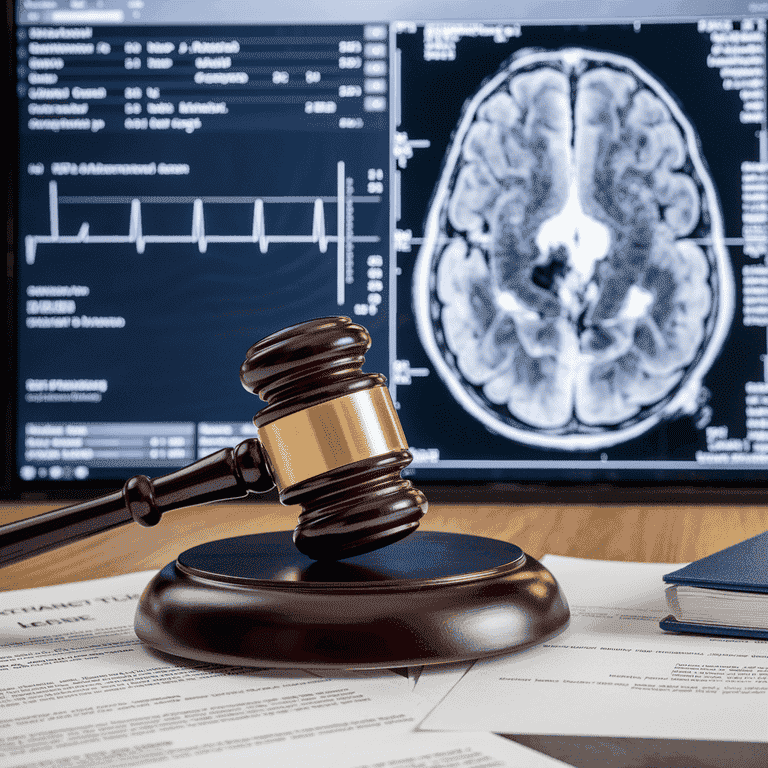
Neurosurgery Expert Witness Qualifications: What Attorneys Should Verify
Training, Medical Licensure, and Board Certification
Request a current curriculum vitae and verify the physician’s medical license, neurosurgery training, and relevant fellowships or additional clinical education. Board certification by the American Board of Neurological Surgery (ABNS) can be checked through the board’s Verify Certification directory. Confirm the actual status rather than relying only on a credential listed in a biography.
Board certification is an important screening consideration, but it does not establish that the physician routinely performs the procedure at issue, nor does it automatically satisfy every court’s expert-qualification requirements. The applicable rules may place additional weight on specialty alignment or recent clinical practice.
Current or Recent Experience with the Procedure
Ask what the physician currently treats, which operations they perform, and how recently they managed cases comparable to the one under review. A distinguished academic background or many years in practice may be valuable, but neither substitutes for relevant, up-to-date clinical experience when the disputed issue concerns a specific technique or treatment choice.
The answer should be concrete: the relevant anatomy, procedure, diagnostic problem, typical alternatives, and complications the physician regularly evaluates. For a case about lumbar instrumentation, experience in lumbar spine surgery is more directly informative than unrelated experience in cranial tumor operations.
Experience Explaining Opinions in Legal Proceedings
Review the expert’s experience with medical record analysis, written reports, depositions, and trial testimony. Prior testimony is not always necessary, especially when a physician has highly relevant clinical experience, but the candidate should be able to explain a medical opinion clearly and respond to disagreement without overstating the evidence.
Where appropriate and available, ask to review sample reports or prior testimony, subject to confidentiality and disclosure rules. Look for a consistent method of explaining the records, the applicable medical reasoning, and any limits on the opinion.
Jurisdiction-Specific Requirements and Admissibility
Counsel should check the expert-qualification rules in the relevant court before engagement. Federal Rule of Evidence 702 addresses the expert’s qualifications, the factual foundation, the reliability of the methods, and their application to the case. State medical-malpractice statutes and evidence rules may impose different or additional requirements, including specialty or practice-related criteria.
The expert supplies the medical analysis; the attorney determines the legal standard and whether the proposed testimony is appropriate for that proceeding. This review is particularly important when the defendant’s specialty, the expert’s specialty, and the disputed procedure do not align neatly.
Evaluate How the Expert Reviews Surgical and Medical Evidence
A qualified neurosurgeon should explain not only what conclusion they reached, but which facts and medical reasoning support it. In a surgical case, the operative report is essential, but it rarely tells the entire story. Attorneys should evaluate how the physician connects events before, during, and after the procedure.
Build a Chronology Around the Critical Decisions
The review should distinguish the information available at the time of each clinical decision from findings discovered later. That distinction matters in allegations involving delayed surgery, selection of a procedure, discharge planning, or a response to postoperative deterioration.
Depending on the case, the relevant material may include:
- Referral notes, initial symptoms, neurological examinations, and the chronology of reported changes.
- Preoperative MRI, CT, angiography, or other relevant studies, including the underlying images when available—not only the written reports.
- Surgical-consent records, treatment alternatives discussed, and preoperative planning notes.
- Operative reports, anesthesia records, implant or device information, and intraoperative monitoring where relevant.
- Postoperative examinations, nursing observations, imaging, consultations, discharge instructions, and follow-up notes.
- Prior medical history, earlier imaging, rehabilitation records, and information bearing on preexisting conditions or other possible causes.
If critical imaging or records are missing, the expert should identify the gap and describe how it may affect the strength or scope of the opinion. A conclusion based solely on selected excerpts may not be sufficient for the questions in dispute.
Separate a Recognized Complication from a Departure in Care
An unfavorable result does not, by itself, establish an improper surgical decision or technique. Neurosurgical procedures can involve serious recognized risks even when care is appropriate. Similarly, the existence of a known risk does not automatically excuse a preventable error.
A careful expert distinguishes what occurred from why it occurred. The analysis may examine the reason surgery was recommended, alternative options, intraoperative findings, the response to a developing complication, and whether the clinical course is consistent with the documented records.
Ask the Expert to Address Causation and Alternative Explanations
Injury and malpractice disputes, the presence of a postoperative deficit or an abnormal scan does not answer what caused the problem. The expert should consider the chronology, relevant prior disease, the natural course of the underlying condition, potential treatment-related factors, and conflicting information in the record.
For example, a patient may have documented degenerative spine disease before an accident or surgery. An expert evaluating a later deterioration should explain what the pre-event evidence shows, what changed, and what conclusions the available records can or cannot support. Medical opinions should be no broader than the physician’s expertise and factual basis allow.

Prepare a Focused Referral Packet Before the First Review
A concise, organized packet helps a prospective neurosurgeon determine whether the assignment fits their experience and whether there is enough information for an initial opinion. Include the following materials when available and appropriate to share:
- A short case summary identifying the disputed treatment or procedure, the parties, and the specific opinions requested.
- A dated timeline of key symptoms, consultations, imaging, clinical decisions, surgery, complications, and follow-up.
- The most relevant medical records and operative materials, with access to complete records or original images if the physician requests them.
- Known earlier conditions, prior procedures, significant alternative explanations, and important gaps in the record.
- The jurisdiction, case posture, expert disclosure and report deadlines, proposed deposition or trial dates, and known scheduling constraints.
- Conflict-screening information and any rules or engagement restrictions the proposed expert needs to know.
Keep the referral neutral. Describe disputed allegations as allegations, not established clinical facts. Ask the physician what additional records would be necessary before offering a reliable conclusion.
Questions Attorneys Should Ask Before Retaining a Neurosurgery Expert Witness
A screening call should help determine clinical fit, independence, communication style, and the practical feasibility of the assignment. These questions are useful starting points:
- Which procedures or conditions in this case match your current clinical practice?
Ask for relevant experience with the specific operation or medical decision. In a cervical fusion case, for example, clarify whether the physician regularly evaluates and performs comparable cervical procedures rather than only treating unrelated neurological conditions.
- What is the central medical question you believe needs to be answered?
Describe the dispute briefly and see whether the physician can identify the critical decision points without being led to a preferred outcome. The response may reveal whether the candidate understands the issue and what additional specialty input is needed.
- Which records and images would you need before forming an opinion?
An appropriate answer may identify source imaging, operative documentation, neurological findings, earlier records, or postoperative testing. Be cautious of a firm conclusion before the expert has reviewed the materials needed to support it.
- How would you assess a poor outcome that may be a recognized complication?
Listen for a reasoned distinction between an adverse event, a departure from accepted care, and causation. The physician should be willing to consider several possible explanations rather than treat the outcome itself as proof of negligence.
- Are any requested opinions outside your area of expertise?
Ask whether the expert can address the imaging, the surgical technique, postoperative decisions, prognosis, and functional impact—or whether another specialist should cover one or more of those issues. Clear boundaries are a strength, not a weakness.
- Can you explain the key findings in language a nonphysician can understand?
Invite the physician to explain one complex point, such as why a particular surgical approach was chosen or what a postoperative finding means. Clear, accurate communication is important for written reports, depositions, and testimony.
- What report, deposition, and trial experience do you have?
Confirm experience with the anticipated work, including cross-examination and explaining divergent medical opinions. Ask what prior testimony, publications, conflicts, or other information may need to be disclosed under the governing rules.
- Can you meet our deadlines and respond to later records or questions?
Verify the time needed for an initial review, full report, supplemental analysis, deposition, and trial. A clinically suitable candidate may still be a poor practical fit if the schedule cannot be accommodated.
- What are your fees and cancellation terms?
Obtain the written fee schedule, minimum time increments, billing arrangements for records and reports, testimony rates, travel and preparation charges, retainer terms, and rules for rescheduled appearances. Clarify what happens if additional material substantially changes the assignment.
Assess Objectivity, Communication, and Testimony Readiness
A useful neurosurgery expert is not a medical advocate hired to endorse a predetermined case theory. The physician’s role is to reach an independent, supportable conclusion from the available evidence and explain the reasoning, including findings that may not favor the retaining party.
When reviewing a sample report or speaking with a candidate, look for explanations that separate facts from assumptions, address material contrary evidence, and avoid claims beyond the underlying records. During testimony, a physician may use anatomical images, operative illustrations, or a surgical timeline when allowed, but those aids should clarify the analysis rather than replace it.
Counsel and the expert can prepare for likely questions and identify confusing terminology without changing the medical opinion to fit a preferred narrative. A candidate who is willing to acknowledge uncertainty and correct an error is often better positioned to explain an opinion credibly than one who promises certainty at the outset.
Red Flags to Resolve Before Engagement
Potential concerns are reasons to ask more questions, not automatic grounds for exclusion. Consider additional screening when a proposed expert:
- Claims to be able to testify about almost any brain or spine issue without identifying relevant procedural experience.
- Offers a definitive standard-of-care or causation opinion before reviewing essential imaging or operative records.
- Treats a known complication as conclusive proof of negligence—or dismisses any complication as unavoidable without analysis.
- Cannot explain the basis for a conclusion or refuses to discuss contrary records and plausible alternative causes.
- Has potential professional, financial, or personal conflicts that have not been reviewed and addressed.
- Cannot commit to disclosure, report, deposition, or trial deadlines, or leaves important fee and scheduling terms unclear.
A well-defined screening process reduces surprises later and helps ensure that the expert’s clinical experience matches the questions the case will require them to answer.
Neurosurgery Expert Witness Fees: What to Confirm
Expert witness fees depend on the physician, the complexity of the record, the urgency of the assignment, and the work requested. Rather than relying on generic hourly-price estimates, request a written agreement that distinguishes record review, imaging review, consultation, report preparation, deposition, trial testimony, preparation time, travel, and cancellation charges.
Ask whether a retainer is required, whether unused funds are refundable, how additional records are billed, and how quickly invoices must be paid. A clear scope and fee arrangement helps the legal team budget the work without influencing the independence of the medical analysis.
Attorney’s Pre-Retention Checklist
☐ The precise diagnosis, procedure, and disputed clinical decision have been identified.
☐ The candidate has relevant current or recent procedural or condition-specific experience.
☐ Licensure, training, board certification status, and relevant credentials have been checked.
☐ The governing court’s expert-qualification and disclosure requirements have been reviewed.
☐ Conflict screening has been completed before sensitive records are shared.
☐ The expert has identified the essential records, source images, and missing materials.
☐ The proposed opinions fit the physician’s expertise and allow for independent conclusions.
☐ Report and testimony needs, scheduling, and fees are documented in writing.
☐ The legal team knows whether a separate specialty review or examination is required.